Wednesday, 31 January 2018

PEDAGOGY OF MATHEMATICS 2

General Objectives of Secondary Mathematics Education
IDevice Icon Objectives
By the end of the course, the learner should be able to:
  1. develop a positive attitude towards learning Mathematics
  2. perform mathematical operations and manipulations with confidence, speed and accuracy
  3. think and reason precisely, logically and critically in any given situation
  4. develop investigative skills in Mathematics
  5. identify, concretise, symbolise and use mathematical relationships in everyday life
  6. comprehend, analyse, synthesise, evaluate, and make generalizations so as to solve mathematical problems
  7. Collect, organize, represent, analyse, interpret data and make conclusions and predictions from its results
  8. apply mathematical knowledge and skills to familiar and unfamiliar situations
  9. appreciate the role, value and use of Mathematics in society
  10. develop willingness to work collaboratively
  11. acquire knowledge and skills for further education and training
  12. communicate mathematical ideas

KNOWLEDGE AND CURRICULUM 1

The 6 Types Of Knowledge: From A Priori To Procedural

types of knowledge
There is so much disagreement over what are, exactly, the different types of knowledge that an agreed upon “master list” simply does not exist. This is because knowledge is purely philosophical; debates span centuries, arguments supersede fact and everyone has a different opinion about what is, or is not, knowledge.
What follows is a master list (although, of course, it won’t be agreed upon) of the different types of knowledge and theories of knowledge that are out there. Turn this new-found “knowledge” on yourself with this awesome

1. A Priori

A priori and a posteriori are two of the original terms in epistemology (the study of knowledge). A priori literally means “from before” or “from earlier.” This is because a priori knowledge depends upon what a person can derive from the world without needing to experience it. This is better known as reasoning. Of course, a degree of experience is necessary upon which a priori knowledge can take shape.
Let’s look at an example. If you were in a closed room with no windows and someone asked you what the weather was like, you would not be able to answer them with any degree of truth. If you did, then you certainly would not be in possession of a priori knowledge. It would simply be impossible to use reasoning to produce a knowledgable answer..

2. A Posteriori

Naturally, then, a posteriori literally means “from what comes later” or “from what comes after.” This is a reference to experience and using a different kind of reasoning (inductive) to gain knowledge. This kind of knowledge is gained by first having an experience (and the important idea in philosophy is that it is acquired through the five senses) and then using logic and reflection to derive understanding from it. In philosophy, this term is sometimes used interchangeably with empirical knowledge, which is knowledge based on observation.
It is believed that a priori knowledge is more reliable than a posteriori knowledge. This might seem counter-intuitive, since in the former case someone can just sit inside of a room and base their knowledge on factual evidence while in the latter case someone is having real experiences in the world. But the problem lies in this very fact: everyone’s experiences are subjective and open to interpretation.

3. Explicit Knowledge

Now we are entering the realm of explicit and tacit knowledge. As you have noticed by now, types of knowledge tend to come in pairs and are often antitheses of each other. Explicit knowledge is similar to a priori knowledge in that it is more formal or perhaps more reliable. Explicit knowledge is knowledge that is recorded and communicated through mediums. It is our libraries and databases. The specifics of what is contained is less important than how it is contained. Anything from the sciences to the arts can have elements that can be expressed in explicit knowledge. Get a taste of explicit knowledge for yourself with this
The defining feature of explicit knowledge is that it can be easily and quickly transmitted from one individual to another, or to another ten-thousand or ten-billion. It also tends to be organized systematically. For example, a history textbook on the founding of America would take a chronological approach as this would allow knowledge to build upon itself through a progressive system; in this case, time.

4. Tacit Knowledge

I should note that tacit knowledge is a relatively new theory introduced only as recently as the 1950s. Whereas explicit knowledge is very easy to communicate and transfer from one individual to another, tacit knowledge is precisely the opposite. It is extremely difficult, if not impossible, to communicate tacit knowledge through any medium.

5. Propositional Knowledge (also Descriptive or Declarative Knowledge)

Our last pair of knowledge theories are propositional and non-propositional knowledge, both of which share similarities with some of the other theories already discussed. Propositional knowledge has the oddest definition yet, as it is commonly held that it is knowledge that can literally be expressed in propositions; that is, in declarative sentences (to use its other name) or indicative propositions.
Propositional knowledge is not so different from a priori and explicit knowledge. The key attribute is knowing that something is true. Again, mathematical equations could be an example of propositional knowledge, because it is knowledge of something, as opposed to knowledge of how to do something.
The best example is one that contrasts propositional knowledge with our next form of knowledge, non-propositional or procedural knowledge. Let’s use a textbook/manual/instructional pamphlet that has information on how to program a computer as our example. Propositional knowledge is simply knowing something or having knowledge of something. So if you read and/or memorized the textbook or manual, then you would know the steps on how to program a computer. You could even repeat these steps to someone else in the form of declarative sentences or indicative propositions. However, you may have memorized every word yet have no idea how to actually program a computer. That is where non-propositional or procedural knowledge comes in.
Now might be a good time to brush up on how we learn with this 


ASSESSMENT FOR LEARNING 1

Assessment Tools and Techniques


There are any number of creative ways to assess how well your students are learning the material you are teaching. The Field-tested Learning Assessment Guide for Science, Math, Engineering and Technology Instructors (more info) site goes into detail about several that have been contributed by faculty all over the country. FLAG presents Classroom Assessment Techniques (CATs) that have been reviewed by an editorial board to make sure that they are compatible with current professional standards for assessment. Some of the CATs they discuss are:
ConcepTest
One or more questions are presented during class involving key concepts, along with several possible answers. Students are polled as to which answer they think is correct. If most of the class has not identified the correct answer, students are given a few minutes to try to persuade their neighbors that their answer is correct. The question is asked a second time by the instructor to gauge class mastery. Check out this section of the Starting Point site that gives an in-depth description of ConcepTests and their use. There is also a collection of geoscience ConcepTest examples.
Mathematical Thinking (Math CATs)
Math CATS are designed to promote and assess thinking skills in mathematics, specifically helping students recognize and solve problems that aren't identical to the ones they saw in the book.
Minute Tests
Minute Tests are concise, written answers by students (individually or in groups), focusing on a short question given by the instructor. These can be given at any point in the class for an instantaneous check-up of how well students are understanding material or at the end of class to help the faculty member design the next class session.

The Southern Illinois University at Edwardsville Classroom Assessment Techniques page. They discuss some different CATs (and provide sample forms for implementing them in class).

The Active and Cooperative Learning in the Classroom site from California State University, LA is a collaboration between the Department of Chemistry and Biochemistry and the Department of Philosophy. The site has a number of Classroom Assessment Techniques that they use in their chemistry classes, but the will work just as well in the Earth sciences. Some examples are:
Clarification Pauses
Throughout a lecture, particularly after stating an important point or defining a key concept, stop, let it sink in, and then (after waiting a bit!) ask if anyone needs to have it clarified. You can also circulate around the room during these pauses to look at student notes, answer questions, etc.
Finger Signals
Students are asked questions and instructed to signal their answers by holding up the appropriate number of fingers immediately in front of their torsos (this makes it impossible for students to "copy", thus committing them to answer each question on their own). For example, the instructor might say "one finger for 'yes', two for 'no'". Or, the instructor might have multiple choice questions prepared for the overhead projector and have the answers numbered (1) through (5), asking students to answer with finger signals. In very large classes the students can use a set of large cardboard signs with numbers written on them.
The Fish Bowl
Students are given index cards, and asked to write down one question concerning the course material. They should be directed to ask a question of clarification regarding some aspect of the material which they do not fully understand. At the end of the class period (or, at the beginning of the next class meeting if the question is assigned for homework), students deposit their questions in a fish bowl. The instructor then draws several questions out of the bowl and answers them for the class or asks the class to answer them.

CREATING AN INCLUSIVE SCHOOL -1


Common Conditions That Cause Disability

Arthritis and other musculature problems. These are the most common causes of long-term disability. They make up as much as a third of all disability cases. Arthritis is probably the biggest single cause.About 1 in 3 people say arthritis affects their ability to do their jobs in some way, according to the CDC.
Other muscle and joint problems -- bad backs, bones that never mend, bad hips -- are common causes of disability too, says Matt Tassey. He's a former chairman of the nonprofit Life and Foundation for Education (LIFE).

YOGA,HEALTH AND PHYSICAL EDUCATION-2

Health education

From Wikipedia, the free encyclopedia
Health education is a profession of educating people about health.[1] Areas within this profession encompass environmental health, physical health, social health, emotional health, intellectual health, and spiritual health.[2]
Health education can be defined as the principle by which individuals and groups of people, learn to behave in a manner conducive to the promotion, maintenance, or restoration of health. However, as there are multiple definitions of health, there are also multiple definitions of health education. The Joint Committee on Health Education and Promotion Terminology of 2001 defined Health Education as "any combination of planned learning experiences based on sound theories that provide individuals, groups, and communities the opportunity to acquire information and the skills needed to make quality health decisions." [3]
The World Health Organization defined Health Education as "compris[ing] [of] consciously constructed opportunities for learning involving some form of communication designed to improve health literacy, including improving knowledge, and developing life skills which are conducive to individual and community health." [4]

Monday, 29 January 2018

YOGA,HEALTH AND PHYSICAL EDUCATION 1

Physical education
From Wikipedia, the free encyclopedia

Physical education equipment in Calhan, Colorado.

Kids using a Parachute
Teachers Physical Education (3307744445).jpg
Physical education, also known as Phys Ed., PE, Gym, or Gym class, and known in many Commonwealth countries as physical training or PT,[1] is an educational course related of maintaining the human body through physical exercises (i.e. calisthenics). It is taken during primary and secondary education and encourages psychomotor learning in a play or movement exploration setting to promote health.[2

Asia

In Singapore, pupils from primary school through junior colleges are required to have 2 hours of PE every week, except during examination seasons. Pupils are able to play games like football, badminton, captain ball, and basketball during most sessions. Unorthodox sports such as, fencing, and skateboarding are occasionally played. In more prestigious secondary schools and in junior colleges, sports such as golf, tennis, shooting, and squash are played. A compulsory fitness exam, NAPFA, is conducted in every school once every year to assess the physical fitness of the pupils.[citation needed] Pupils are given a series of fitness tests (Pull-ups/Inclined pull-ups for girls, standing broad jump, sit-ups, sit-and-reach and 1.6 km for primary [10- to 12-year-olds]/2.4 km for secondary and junior college levels [13- to 18-year-olds]). Students are graded by gold, silver, bronze or as fail. NAPFA for pre-enlistees serves as an indicator for an additional 2 months in the country's compulsory national service if they attain bronze or fail.
In Malaysia, pupils from primary schools to secondary schools are expected to do 2 periods or 1 hour of PE throughout the year except a week before examination. In most secondary schools, games like badminton, sepak takraw, football, netball, basketball and tennis are available. Pupils are allowed to bring their own sports equipment to the school with the authorization of the teacher.
In the Philippines, PE is mandatory for all years. Unless, the school gives the option for a student to do the Leaving Certificate Vocational Programme instead for fifth and sixth year. In the Philippines, some schools have integrated martial arts training into their physical education curriculum.[3][4][5][6][7]

Indonesian high school students playing the traditional game "Benteng"
In Indonesia, students ranging from Kindergarten to High School have PE integrated with their curriculum. Kindergarten until Grade 3 of Elementary students have gymnastics, starting from Grade 4 of Elementary School, students will be introduced to traditional martial arts Pencak Silat and some team games such as badminton, tennis, football, futsal, rounders, basketball, etc. Starting from Junior High School, several other games such as basketball, volleyball, cricket, tennis, badminton, kho kho, kabaddi, etc. are played. Several drills and physical training are taught.

CREATING AN INCLUSIVE SCHOOL 2


Inclusive education in India

Rooted in Rights welcomes articles by guest authors from across the globe to enhance understanding about the rights of people with disabilities. This piece about inclusive education in India is contributed by Dr. Anindita Chatterjee, Clinical Psychologist, and Director of the Julian Day New Mission, a private school, located in Kolkata, West Bengal, India.

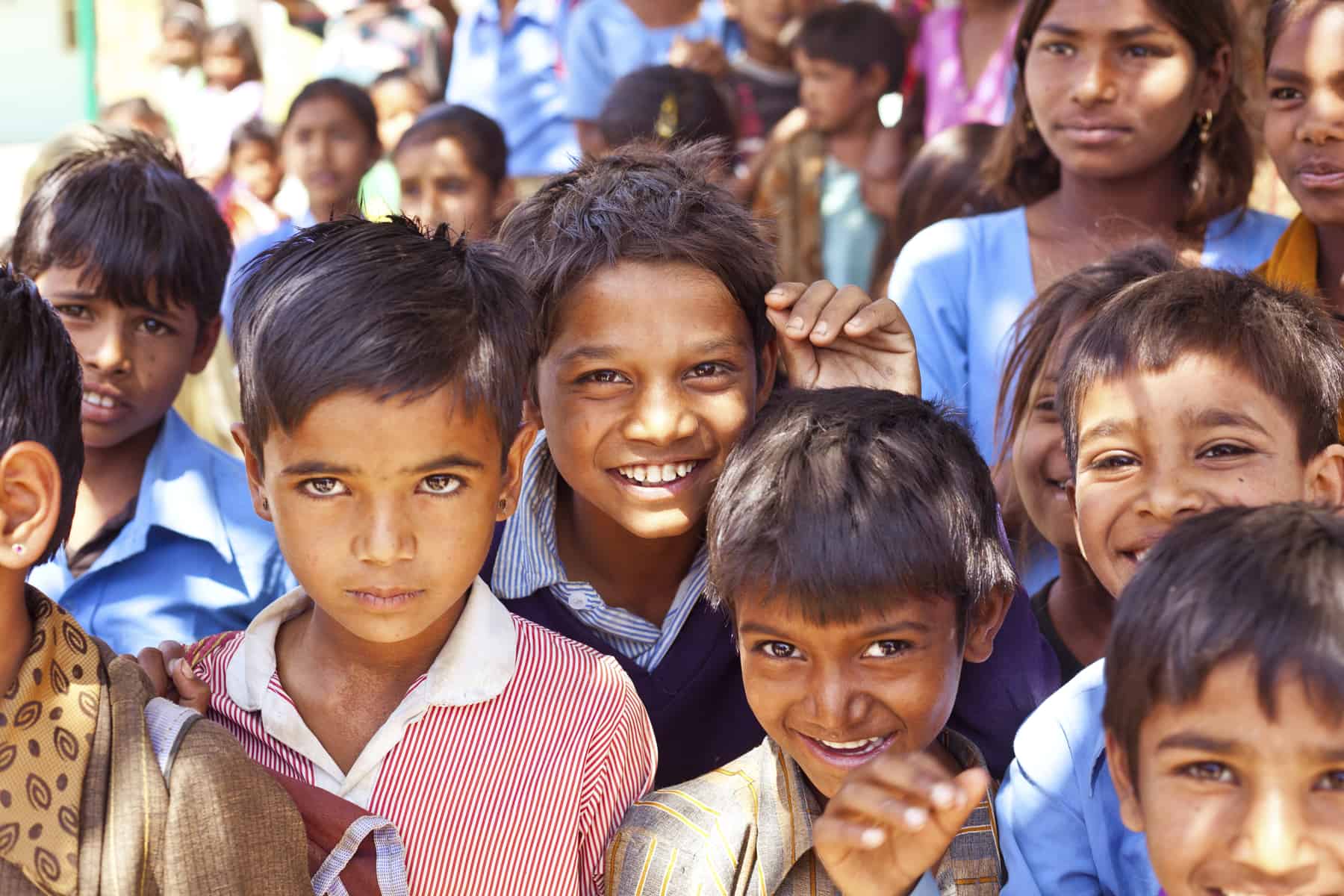
group of indian school children smiling
Inclusive Education in India
10% of the world’s population lives with a disability, and 80% of these people with disabilities live in developing countries. The services available for people with disabilities differ widely between developed and developing countries. One of these services is education. The international community, as per the United Nations Convention on People with Disabilities, is becoming increasingly aware of the different models of special education. The three basic models include segregated, integrated and inclusive special education, have been differentiated between by international and governmental agencies. Overwhelming support is being shown by all segments from human rights activists, nonprofit organisations, social welfare departments, governmental organizations, governments and international agencies, all in favour of the right to education in the form of inclusive education as the most beneficial type of education for people who are differently able.
After independence in 1947, the Government of India created several policies in terms of special education. Although the Government of India has attempted to create policies that are inclusive for people with disabilities, their implementation efforts have not resulted in an inclusive system of education, nor have they reached their goal of “education for all” across the country. The Government of India needs to bridge the gaps in their education system to build a strong system of inclusive education in India.
It is important to note that within government documents and scholarly publications in India, the three different terms-segregation, integration and inclusion-are often used interchangeably. This could stem from a variety of reasons, although a lack of education, lack of skilled persons, and lack of awareness on the original meanings connected to the words seems to be the most logical explanation.
Policy in India has always leaned towards inclusion. From the constitution to the Kothari Commission in the early days of the republic, to the 2005 Action Plan for Children and Youth with Disabilities and the 2006 National Policy for People with Disabilities recently, the Indian government tends to write inclusive policies on education. However, these policies often are not perfectly inclusive. Many of them tend to discriminate against people with “severe” disabilities, or people with intellectual disabilities.
Statistics on disability in India vary widely, and accuracy of statistics is always questionable since still many families do not reveal the truth if they have any children with disabilities in the family. They feel segregated from the mainstream society. However, almost all of the statistics available point to the gaps in the education system, the marginalization of children with disabilities, and the need of the Government of India to step up their efforts to reach their goal of “right to education.”  There is always controversy in terms of mainstream versus special schooling. Still, at present, the policies governing the education system are inclusive. At present, the problem is with implementation of the said policy and moreover educating the mainstream teachers who need to change the attitude.
Curriculum is another area that needs a makeover. There is no curriculum for children with special needs to help them remain in the mainstream education. This creates a segregation between people with and without disabilities.
Another area that needs to be explored is testing. India has extremely rigid assessments and examinations, which stems from their dependence on a British-style education system. Although some alternative mediums of testing are available to accommodate students with disabilities, adaptations of tools, medium and methodology of assessment are all grey areas.
The need of the hour is to end the differences between words like special education, regular education, and inclusive education.

ASSESSMENT FOR LEARNING 2


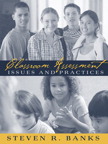
Classroom Assessment Issues and Practices


classassess
What is assessment for? I have been doing exams all my life - either writing them as a student, or marking them as a teacher. Frankly, I'm not sure what is worse. Exams are a good example of the many great disconnects in education. That is, they don't demonstrate what students know very well - they seem to to be more interested in what students don't know.
In the USA, a big driver of reform is Bush's No Child Left Behind policy (2001). All schools need to do annual assessments are are concerned about accountability and comparisons between schools. Other issues are the accrediation of teachers and also the inclusion of students with special needs into mainstream education.
These issues are the motivation for the book Classroom Assessment Issues and Practices.
I like the way each chapter of the book begins with a case study. The first one raises the issue of how important the nationwide accountability examinations are to administrators - and how confusing this can be for first-time teachers. What is the scope for developing interesting assessments, when the government is calling the shots?
There is an emphasis in the book on alternative asssessments - a memorable one being the peer assessment game, where students assess each other on certain positive classroom behaviours.
The Buckley Amendment is something that much of Asia would never adopt willingly. This 1974 law prohibits the disclosure of academic records to anyone other than the student or the parents. The outcome of this is that it reduces competition in the classroom & encourages a cooperative atmosphere. Many Asian school systems thrive on competitive structures... However, what I find interesting is that one aspect of the No Child Left Behind policy means that students may opt out of a "failing school" and go to a "passing school" in the same district. Is that competitive pressure, or what?
Another interesting aspect of No Child Left Behind is the requirement that all children must be able to read by the end of 3rd grade. This is good - but how is "read" defined and assessed? Do the assessors have a conflict of interest, in that the school must "pass" so the temptation is to "pass" every kid at that level?
The worry for all teachers under such a system is - what if my students are weak to start with (for all sorts of reasons - socio-economic background, limited educational opportunities, home background, disabilities) and it is such a long journey for them to reach the required standards. Why am I made accoountable for society's failings?

KNOWLEDGE AND CURRICULUM 2

The Difference Between Knowledge And Skills: Knowing Does Not Make You Skilled
For many people, knowledge and skills are similar concepts used to describe competency. But for learning professionals they should be considered as two quite different yet related concepts.


The Difference Between Knowledge And Skills: Knowing Does Not Make You Skilled

Identifying The Difference Between Knowledge And Skills 

Knowledge is information acquired through sensory input: Reading, watching, listening, touching, etc. The concept of knowledge refers to familiarity with factual information and theoretical concepts. Knowledge can be transferred from one person to another or it can be self acquired through observation and study.
Skills, however, refer to the ability to apply knowledge to specific situations. Skills are developed through practice, through a combination of sensory input and output. As an example, social skills are developed through interaction with people by observing, listening, and speaking with them. Trial and error is probably the best way to achieve skills mastery.
To make it simple, knowledge is theoretical and skills are practical. You can know all the rules of a sport, know all the teams and all players, know all the statistics, but this only makes you knowledgeable about this sport; it does not make you any good at it. To become good at a sport you must play it, practice its techniques, and improve your skills through experience. You don’t need to know all the teams or all the players to practice a sport and you can easily learn the rules as you play, through trial and error.
The same applies to a job: One can know a lot about a subject matter, but might not have the skills required to apply that knowledge to specific tasks, since knowledge does not provide skills. However, developing skills normally provides some knowledge, as practicing those skills results in sensory inputs. As an example, an aerospace engineer may know a lot about avionics and flight theory, but this alone does not make him an aircraft pilot. On the other end, an aircraft pilot only requires a minimal level of knowledge about avionics and flight theory in order to be able to fly the plane, and this knowledge will continue to increase as he gains experience flying a simulator or an actual plane.


Saturday, 27 January 2018

PEDAGOGY OF MATHEMATICS 1


  1. 10 points for exploring Maths creatively!

    by
    Image: Shutterstock/Sergey_Nivens
    Teaching primary maths should not be bound to any textbook, physical classroom, nor to any single specific learning outcome as set in our curricula. Maths is a term that opens the gate to a richness of opportunities to investigate skills and concepts in a much wider context, i.e. real life.
    This is the current perspective and pedagogical stance which is directing primary maths teachers into exploring innovative and creative ways on how to present mathematical concepts to pupils by increasingly making links to everyday mathematics. This approach does not only imply creativity from the teacher’s side, in terms of differentiated learning tasks and varied use of resources, but also promotes the presence of creative learning tasks as embarked upon by the pupils themselves. Mathematics is no longer viewed as a stand-alone subject, but is purposefully linked to other learning areas enabling learners to explore a diverse range of concepts and skills while interrelating maths with language, social, digital and art skills, to name a few. Of course, there are aspects about mathematics which remain salient towards acquiring a strong grasp of number sense and becoming fluent at mental mathematics, for instance.Empowers pupils to take ownership of their learning as active learners
It is no longer about the teaching but rather about the learning. The distinction reflects the important notion that pupils should be actively engaged in the learning process. Pupils are given the opportunity to enquire, investigate and choose from a variety of resources. They can direct the focus of their learning according to their interests and prior knowledge. Pupils’ motivation and expectations increase and so does their confidence in engaging with maths skills and concepts.

  1. Promotes investigative and problem-solving skills
Creative mathematics is all about developing problem-solving skills which enables pupils to solve unfamiliar mathematical problems creatively. Pupils realise that there might be more than one possible solution to solving a given situation and learn how to adopt diverse strategies towards problem-solving which best suit their learning styles, capabilities and situation. Pupils are also given the time, space and resources to explore mathematical skills and concepts and can devise their own path to a solution.

  1. Establishes connections to real life making learning more relevant
The notion of a classroom has been subject to strong competition with the real world beyond its walls, as well as the instantly accessible virtual world. In today’s information-based and highly globalised society, it is simply absurd to teach without acknowledging real data that is surrounding and bombarding us every second. Teaching and learning should be ever more connected and contextualised in real life circumstances. We cannot have pupils ask; “Why are we learning this?”. The more we establish links between learning and real life, the better can pupils apply their knowledge and skills, and regard the learning as valuable and relevant. Learning tasks should be more based on real life situations, enabling learners to tap into their prior knowledge whilst becoming more engaged with the task at hand. Such examples of realia include; menus, TV schedules, informative websites, transport information, published newsletters, promotional leaflets, sports websites, etc.

  1. Presents opportunities for collaborative learning and communication
Creative learning tasks entail the exploration of diverse learning modes which include collaborative group work. Pupils learn to work with other learners who have different learning abilities and together attempt to find a strategy on how to produce something or solve a given task. Throughout this process, the pupils are actively engaged in dialogue. They learn to verbalise their mathematical thinking and to consolidate their use of mathematical vocabulary. Pupils learn to enage in self-assessment and they evaluate their best capabilities, and assign different tasks of the project to specific members of the group in order to reach their final goal. Such tasks allow pupils to develop their social and communication skills, which prepares them for the future. It is the teacher’s responsibility to form functional group clusters by having diverse learners grouped together. Groups should be kept small, so that every student remains engaged and feels important to the rest of the team. One important tip is to assign specific roles within the student’s abilities, and whose duty is necessary in order for the group to reach their final objective or produce their desired outcome.

  1. Fosters initiative, innovation and creative thinking
Much focus is being placed upon the terms initiative and creativity, as part of the list of transversal skills required in the 21st century. Society needs citizens who are able to take initiative, who are good decision-makers, problem-solvers and who are able to be creative and think outside the box. Exploring mathematics creatively involves providing open-ended opportunities for our pupils to work collaboratively and to design innovative strategies and solutions to a given situation. This practise allows pupils to foster such important skills which allow them to thrive and to be better equipped for tomorrow’s world.

  1. Explores maths through technology
Our children are constantly surrounded by technology especially mobile touchscreen devices. From a very young age they seem to hold an instinctive disposition to interact with screens and to respond to visual cues. This exposure is enforced both in households as well as in other locations outside the home, such as shops, restaurants, shopping centers, etc. Technology has revolutionized the concept of education and has shifted the learning process to one which is more self-directed, creative and also game-based. Exploring maths creatively acknowledges and values the potential and vast resources which technology can provide us.  or other pupils from other schools.
image
Coding Maths Investigations with the Pro-Bot

  1. Supports pupils with diverse abilities
Adopting this approach towards exploring maths in real life, also serves to cater for the different students who are diverse in terms of learning abilities and preferences. Such an approach can be considered inclusive and through the continuous representations of mathematical situations as drawn from real life, pupils will have the chance to explore maths from different perspectives while the learning becomes more appealing. The variety of learning modes, enables most students to participate and to remain engaged on the task.

  1. Nurtures mathematical thinking and reasoning
Fundamental to mathematical learning is the ability to think and reason mathematically. It is important to present opportunities whereby the students are able to explore the process of problem-solving through mathematical thinking and reasoning. These situations also enable the learner to become better at communicating their thinking and in finding the appropriate vocabulary to explain their reasoning. Students are also able to observe that there might be more than one possible and reasonable solution to a given problem. Mathematical reasoning can be exemplied verbally, visually or through models.

  1. Blurs the boundaries among different curricula areas
One very positive aspect about exploring maths creatively is that it does not only establish a more dynamic relationship among the teacher and the students, but it also establishes links with other learning areas, creating a multi-disciplinary approach to learning. Teachers can collaborate into providing project-based learning scenarios whereby students work in groups and explore a given situation or location and require a myriad number of skills in order to reach their goal or final product. Students learn to establish connections between maths and language, art, history, science, technology, physical education and other aspects of the curricula.

  1. Heightens understanding and retention
Hands-on experiences allow students to apply their learnt skills and concepts in practice. Such opportunities provide pupils with a repertoire of experiences which they can recall and allows them to become more confident at applying their knowledge in the future. Through hands-on practice, learners are able to self-assess where they require further support. These activities provide a meaningful context to learning and promotes retention of learnt maths skills and concepts.
Throughout my past years as a maths support teacher, I have had the possibility to visit many primary schools in my country. These visits implied opportunities to collaborate with class teachers and together explore innovative mathematics pedagogies, which appeal to different students and which attracts them towards participating in engaging maths activities.